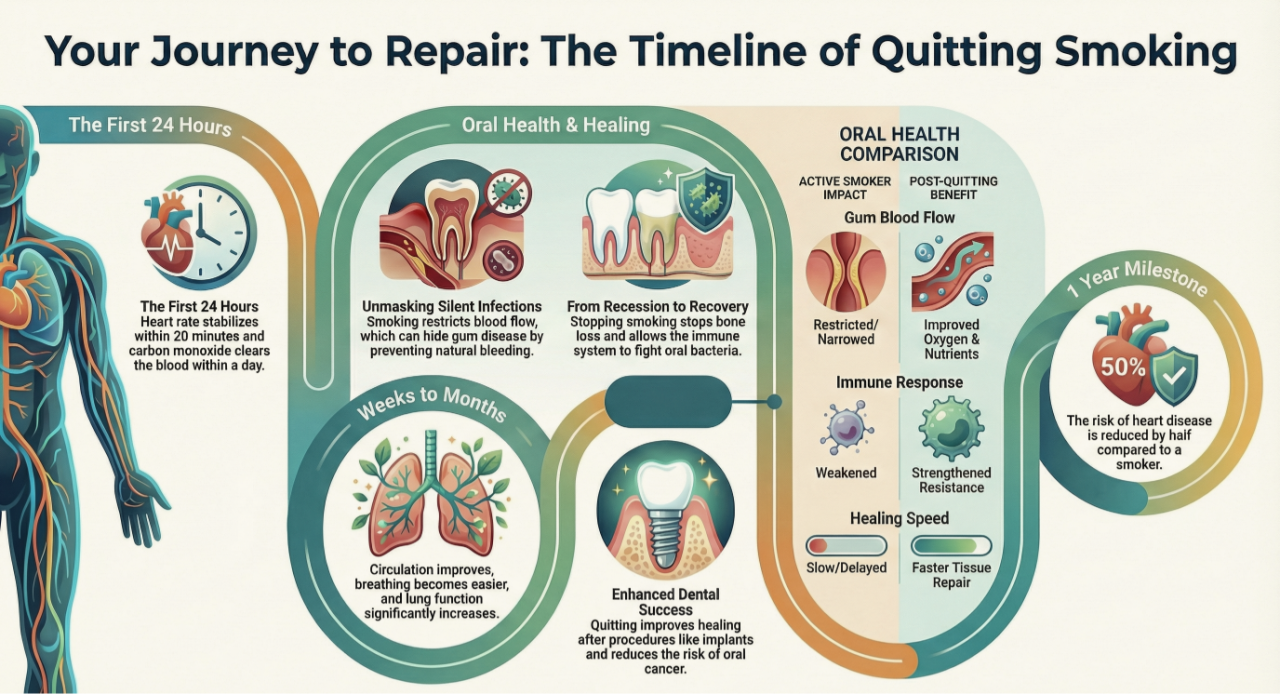
On 11 March 2026, the UK marks No Smoking Day - a national moment to reflect on how smoking affects our health and to support anyone considering quitting.
At York Place Dental in Carlisle, we see the effects of smoking every day - not just in the lungs, but in the mouth, gums and overall health of our patients.
Whether you smoke, used to smoke, or have never smoked, this is worth knowing.
What Happens to Your Body When You Stop Smoking?
The body begins to repair itself almost immediately.
- Within 20 minutes – Heart rate and blood pressure begin to return to normal.
- Within 24 hours – Carbon monoxide leaves the bloodstream, allowing oxygen levels to rise.
- Within weeks – Circulation improves and breathing becomes easier.
- Within months – Lung function increases and energy levels improve.
- Within 1 year – The risk of heart disease is reduced by half.
Stopping smoking reduces the risk of:
- Heart disease
- Stroke
- Lung disease
- Several types of cancer
The body is remarkably resilient, it just needs the opportunity to heal.
How Smoking Affects Oral Health
Many people understand the link between smoking and lung health.
Fewer realise that the damage often starts in the mouth.
Here's what smoking does:
1. It Restricts Blood Flow to the Gums
Smoking narrows blood vessels. This means less oxygen and fewer nutrients reach the gum tissue. Healthy gums need strong blood supply to fight infection.
2. It Masks Early Warning Signs
One of the early signs of gum disease is bleeding.
Smoking reduces bleeding, which might sound positive, but it actually hides infection. Gum disease can progress silently.
3. It Weakens the Immune System
Smoking makes it harder for your body to fight bacteria in the mouth. This increases the risk of:
- Gum disease (periodontitis)
- Bone loss around teeth
- Tooth mobility and eventual tooth loss
4. It Increases the Risk of Oral Cancer
Smoking significantly raises the risk of cancers affecting the tongue, cheeks, throat and lips.
5. It Slows Healing
After dental treatments - including extractions, implants or even hygiene therapy - smokers often heal more slowly.
The Good News: Your Mouth Can Recover Too
When you stop smoking:
- Blood flow to the gums improves
- Inflammation reduces
- Your immune response strengthens
- Gum treatment becomes more effective
- Healing after dental procedures improves
- Your long-term risk of oral cancer begins to decrease
Patients often notice fresher breath and healthier-feeling gums within weeks.
The mouth is one of the first places we can actually see health improving. If you are considering stopping smoking, support is available through national NHS services, and we are always here to discuss how it affects your oral health in a practical, supportive way.
Your Health, Long Term
At York Place Dental, we don't just look at teeth - we look at long-term wellbeing.
If you're concerned about:
- Bleeding gums
- Gum recession
- Persistent bad breath
- Loose teeth
- Oral cancer screening
or simply want reassurance about your oral health, our team is here to help.
No Smoking Day, 11 March 2026, is a reminder that change is possible - and that even small decisions can improve your health for years to come.
A healthier future can start today.
How many cigarettes per day can cause oral health damage?
Even a small number of cigarettes - just a few per day - can harm your gums, teeth, and mouth. There is no completely safe level of smoking, as the chemicals in tobacco begin affecting blood flow, bacteria balance, and tissue health from the very first cigarette.
Can switching to vaping or e-cigarettes improve my oral health?
Vaping is often considered less harmful than smoking, but it's not harmless. Many e-liquids still contain nicotine, which reduces blood flow and slows healing. Some ingredients can also irritate gums and dry out your mouth. Quitting entirely is the best option for your oral and overall health.
Does smoking increase my risk of mouth cancer?
Yes. Chemicals in tobacco can damage the DNA in your mouth and throat cells, which can lead to cancer. Even light or occasional smoking increases the risk, and quitting helps reduce future risk.
Why does smoking cause bad breath?
Smoking leaves tar and nicotine residues on teeth and gums, encourages bacteria that produce foul-smelling compounds, and reduces saliva flow, all of which combine to create persistent bad breath. Even brushing and mouthwash only mask the smell temporarily - the only long-term solution is quitting.
How soon after quitting smoking will I start to see improvements in my oral health?
Some benefits start within weeks: blood flow to your gums improves, healing speeds up, and gum inflammation begins to reduce. Over months, plaque and tartar buildup decreases, breath becomes fresher, and the risk of gum disease and tooth loss is reduced. Long-term, teeth may become whiter, risk of oral cancer decreases, and dental treatments are more likely to succeed.
Do smokers have less sensation in their mouths?
Yes. Smoking can reduce blood flow and damage nerve endings in the gums and oral tissues, making the mouth less sensitive to temperature, texture, and pain. This can hide early signs of gum disease or other dental problems.
Can smoking make dental treatments or injections less effective?
Yes. Restricted blood flow and slower healing can affect how well your body responds to treatments like fillings, extractions, and gum therapy. Smoking may also reduce how local anaesthetic works, meaning it might take longer or need higher doses to numb the area.
Can smokers still get dental implants?
It's possible, but smoking greatly increases the risk of implant failure. Nicotine slows healing and affects how bone fuses with the implant. Many dentists recommend quitting before treatment to improve success rates.
How does smoking cause tooth loss?
Here's a clear, step-by-step explanation of the process.
1. Gum Recession:
Smoking, poor oral hygiene, or gum disease causes the gums to pull away from the teeth. This exposes more of the tooth and its root, creating 'pockets' where bacteria can collect.
2. Bone Loss:
Bacteria in these pockets trigger inflammation. Chronic inflammation and infection gradually destroy the bone that supports your teeth. Smoking accelerates this process by reducing blood flow, weakening your immune response, and slowing healing.
3. Loose Teeth:
As the supporting bone and gum tissue are lost, teeth lose their stability. They may feel loose, shift position, or eventually fall out if the bone and gum loss are severe.
End result: Gum recession leads to bone loss, which then compromises tooth stability and can ultimately result in tooth loss.